
Building AI systems that hold up in production.
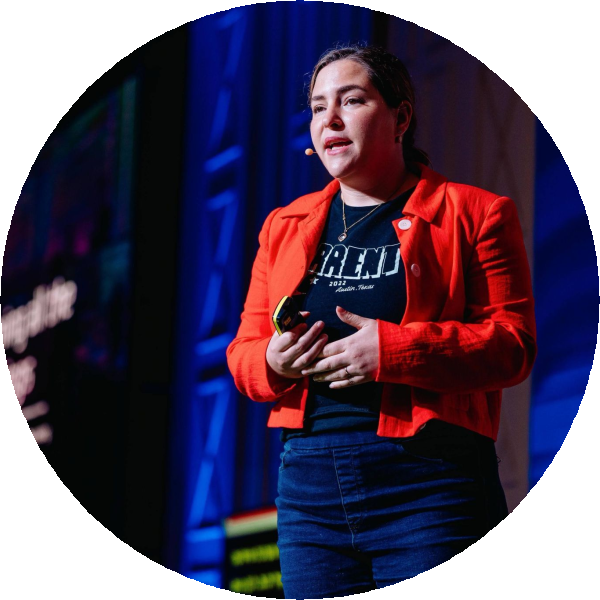
A five-week live cohort with Adi Polak for experienced engineers and architects responsible for taking AI from prototype to production, across context pipelines, agents, platform policy, and evaluation.
Most AI decisions get hard after the demo works.
A prototype that answers well in a notebook meets different problems in production: retrieval that drifts as data changes, agents that loop or call the wrong tool, inference costs nobody budgeted for, and no agreed way to tell whether the system is getting better or worse.
The difficult part is rarely choosing a model. It is deciding where AI belongs in the delivery lifecycle and where to keep it out, what a shared platform should own, and how to contain failures before they reach users.
Across five weeks, compare those decisions with experienced practitioners working in different companies and industries, then apply the thinking to AI work already in motion.
Full syllabus
Becoming an AI-Native Engineering Team
Define what AI-native engineering means for your team today across product thinking, daily habits, and architectural trade-offs, and separate real value from hype, including Hilary Mason's idea of AI ambiguity and Naomi Saphra's point that language models continue patterns rather than reason. Discuss how to keep existing risk management and resilience practices intact when adopting AI, assess where your team sits on the maturity scale, and identify one viable AI engineering opportunity. Between sessions, map your current software development lifecycle, propose where AI tools fit, name the organizational friction you expect, choose one boundary where AI stays out, and define a measurable signal for success.
Designing & Building RAG & Context Pipelines
Treat RAG as the workhorse pattern of enterprise AI, where quality depends on data, retrieval design, and memory. Go beyond prompt engineering to design production-grade RAG systems and context engineering pipelines, use knowledge graphs, and manage ephemeral and long-term memory so answers stay grounded and current. Discuss where traditional RAG breaks in production, compare vector RAG with Graph RAG across contrasting use cases, and separate ephemeral context from durable knowledge. Between sessions, design a retrieval architecture for a complex query scenario at your organization, justify each layer, explain how it handles data changes, and name the biggest failure mode you expect.
Designing & Building AI Agents
Design agentic systems that hold up beyond the demo. Work across the spectrum from single-purpose tools to multi-agent systems, covering orchestration, control, memory, and the trade-off between autonomy and certainty. Critique a real agent architecture for failure modes such as tool errors and runaway loops, then pressure-test when a single, well-tooled agent beats multi-agent orchestration. Between sessions, design an agent for a real task at your organization, with its tool inventory, expected failure modes, escape hatches against runaway behavior, and an evaluation plan.
AI Platforms & Infrastructure
Work through the platform and infrastructure patterns that make AI systems production-ready, including inference gateways and GPU cost controls, and decide what to centralize and what to keep federated. Review a system architecture for inference waste, defend the hardware and stack choices that reduce token costs, and whiteboard the gateway policies your organization needs, such as rate limits, cost caps, and PII handling. Between sessions, outline an internal AI platform strategy for a mid-sized organization, covering workload routing for latency-critical tasks, core observability signals, and the federated versus centralized split.
AI Operational Excellence: Evals, Trust & Reliability
Examine the operational disciplines that make AI systems dependable in production: evaluation metrics, trust, and rollout readiness. Most of the session is capstone presentations and peer discussion.
Get the cohort details in your inbox.
We’ll send you the schedule, facilitator, full syllabus, weekly time commitment, price, registration link, and manager approval page in one email.
A live certification cohort, not another self-paced course.
Selected QCon and InfoQ technical material provides a starting point. The live sessions are where the group examines trade-offs, challenges assumptions, and sees how the same issue changes in other environments.
Between sessions, put the thinking into practice against systems, proposals, controls, assessments, or decisions you already own.
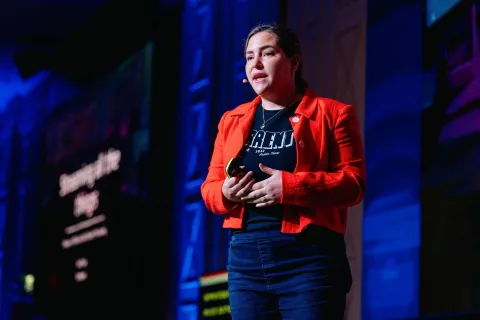
Adi stays with the cohort across the five weeks so later discussions can build on what participants tried between sessions.
How the five weeks work
Compare where the same control changes.
A control that works in one environment can behave differently when the data, architecture, regulation, threat model, team structure, or operating constraints change.
The cohort gives you other reference points while the decision is still current. The value is not generic networking. It is seeing where an approach transfers, where it changes, and why.
Finish with an assessment in AI Engineering Program you can point to.
Develop a documented risk assessment and mitigation report for an AI product architecture and present the work as part of the cohort.
Complete the current attendance, participation, and capstone requirements to earn the InfoQ Certified AI Engineering Program credential.
See the kind of work the capstone produces.
The capstone is developed as a professional technical article built around a documented risk assessment and mitigation report for an AI product architecture. Selected work may be published on InfoQ under the current program terms.
Is this the right cohort for the work you own?
Designed for experienced practitioners, generally with at least five years of professional experience.
Start from QCon and InfoQ technical material.
Selected QCon talks and InfoQ technical material provide the starting point for the cohort. The live sessions are where participants examine those ideas against different systems, organizations, and constraints.
Open the shared Convince Your Manager page with this cohort preselected. The guided prompt uses the current October 14 intake facts and asks about your role, current work, the problem you want to work through, what your manager cares about, and the most likely objection.
It then drafts a ready-to-send manager email, a version under 150 words for Slack or Teams, five short talking points, and one note on any missing detail that would materially strengthen the request.
Cohort questions
Building AI systems that hold up in production.
with Adi Polak
Sign up for event updates
Hear about the latest InfoQ developments. Be the first to learn about our in-person and virtual events.