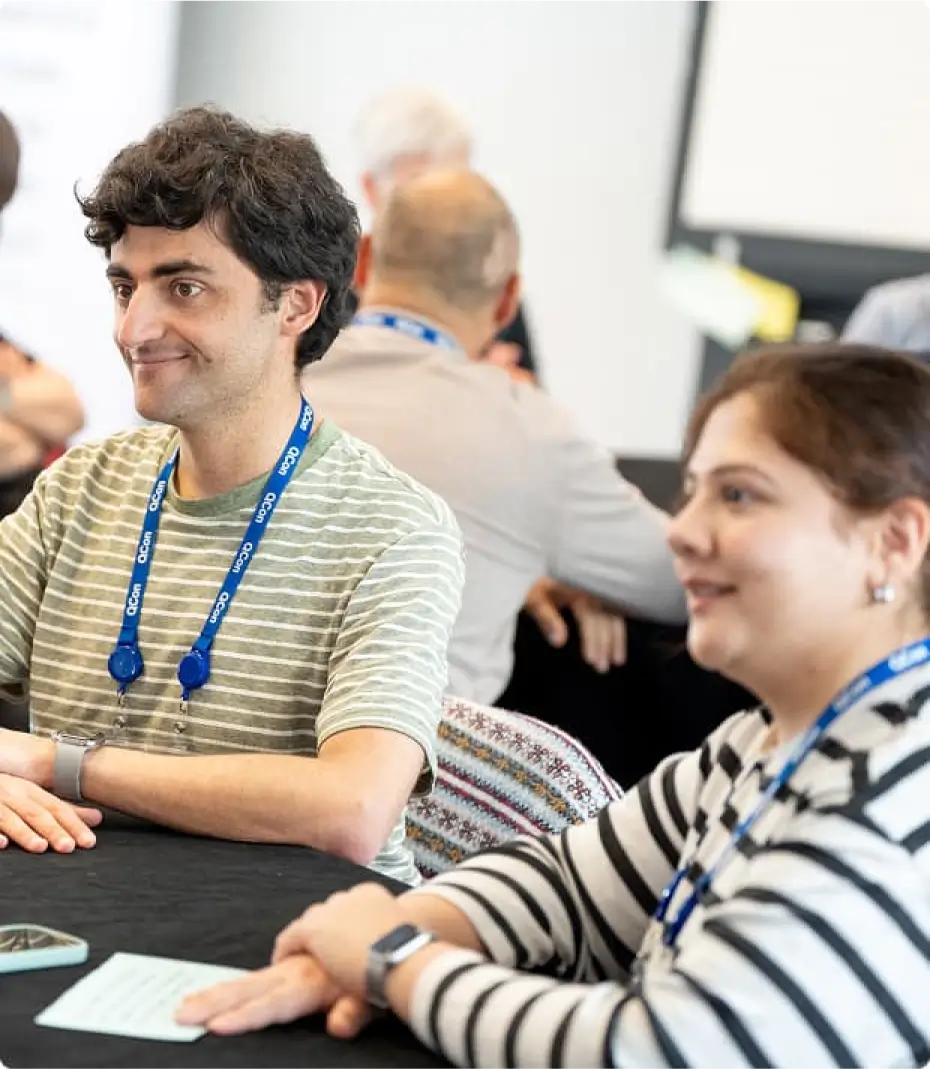
Architecture
The sociotechnical side of architecture. Trade-offs and communication, decentralized decision-making, platform engineering, AI architecture decisions.
Five weeks for experienced software practitioners comparing team structure, flow, AI roles, and metrics with peers from other organizations.
Leave with a target operating model for your team and a clearer basis for the decisions behind it.
4 live hours a week · 5 weeks · Online
Next cohort: November 17, 2026
Limited places per cohort. Tue & Thu, 04:00PM - 06:00PM CET
USD1,470
per cohort
Need company approval?
Download the "Convince Your Manager" template.
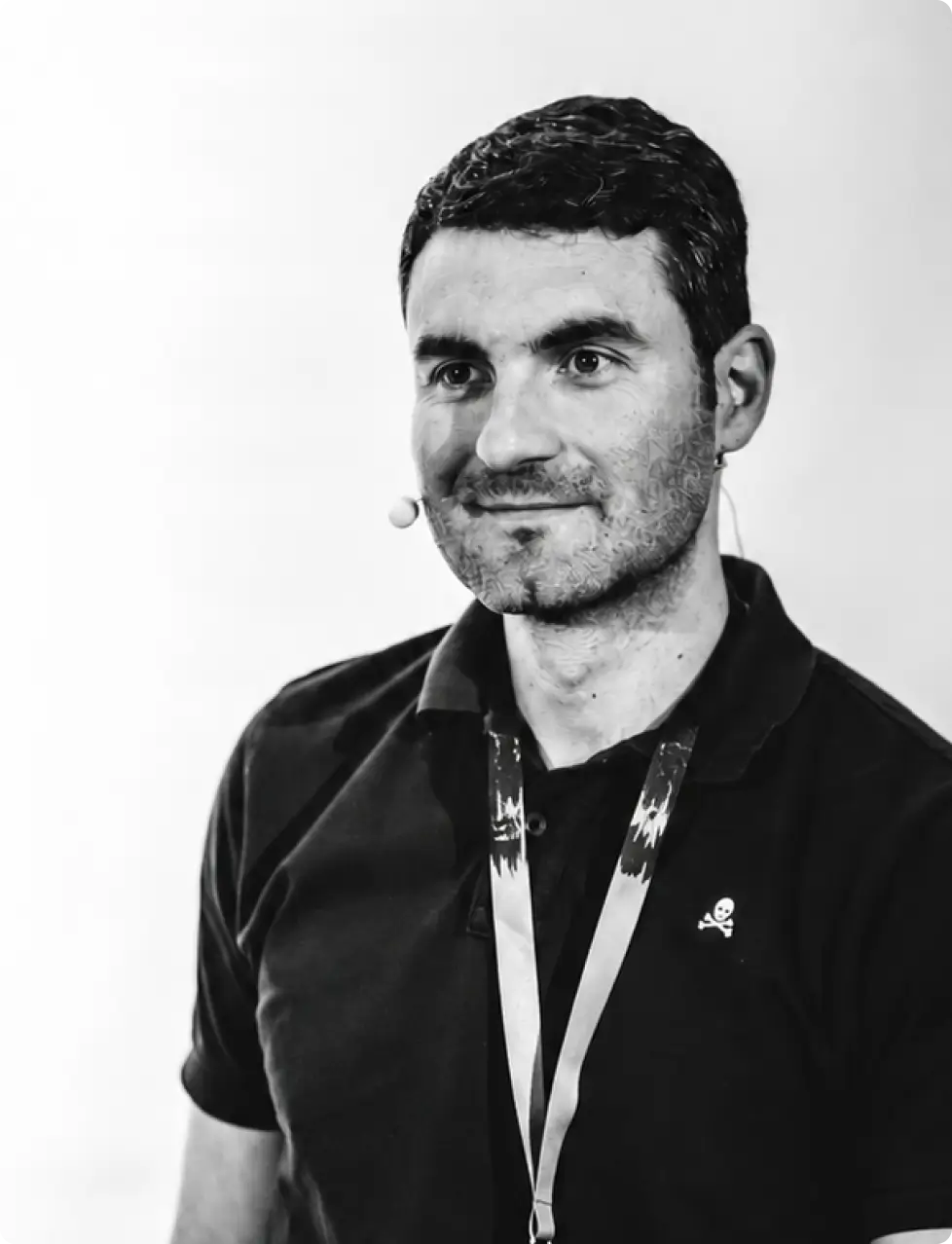
High-Performing Teams Cohort Facilitator

Facilitated by Olimpiu Pop

Small live cohort across organizations
Bring a current team or delivery challenge
Start from selected QCon material
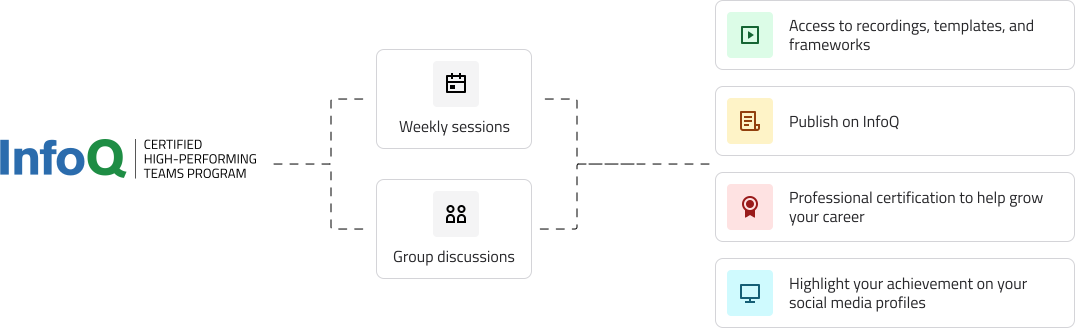
Build a target operating model
Earn an InfoQ certification




















(GMT+1 - Berlin time)
 Dates: Nov 17, 19, 24, 26, Dec 1, 3, 8, 10, 15, 17
 Time: Tue & Thu, 04:00PM - 06:00PM CET
 Location: Online (Zoom)
Need company approval?
Download the "Convince Your Manager" template.
The single most valuable outcome has been improving how I write and think. I can now articulate trade-offs in a way that improves my proposals at work.
Chinmay Sawaji,
Senior Software Engineer @Klaviyo
This cohort gave me structured time each week to step back and think about what it really means to be an architect.
David Holliday,
Product manager / Product Owner @Munich Re
The Architecture Canvas was a game changer. We've made different decisions because of how we're structuring conversations. It wasn't just theory.
Ian Hockett,
Staff Software Engineer @Exact Sciences

Team-design decisions rarely sit in one place. Structure, delivery flow, ownership, the role AI plays in the work, and what you measure all constrain each other. The five weeks follow that sequence, from team design and flow through AI-enabled delivery and metrics, to the target operating model your group presents in week 5.
Examine the structures, culture, and process choices behind teams that deliver well. Identify bottlenecks in your own delivery setup and compare alternative team and workflow patterns.
Work through what interrupts flow, where teams become dependent on individuals or external groups, and what needs to change in responsibilities, infrastructure, or process.
Examine what changes when AI agents join the delivery process. Compare what can be delegated, what still needs human judgment, and what new artifacts or controls the team needs.
Compare measurement frameworks and metric anti-patterns. Work out what still tells you something useful when AI changes where the bottleneck sits.
Examine the ethical and environmental implications of AI-enabled delivery, then present the target operating model your group has built across the five weeks.
This cohort is for people already responsible for how engineering work gets done, not only what gets shipped.
You may be deciding how teams are structured, where responsibilities sit, how delivery flow should work, what to measure, or how AI changes the operating model. You should be able to bring a current team or organizational challenge into the discussion.
Designed for:
Probably not a good fit if:
Each week has two live sessions and a small amount of independent work, built around selected QCon material for
that week and the team problems participants bring from their own organizations.
Start from selected QCon material: one or two talks or other selected technical material as the starting point for the week.
Work through the trade-offs live in two 2-hour sessions with Olimpiu and the cohort. Compare how the same problem changes under different systems, organizations, and constraints.
Apply it to a current team problem: use the week's framework or discussion against a decision you are already dealing with at work.
Bring back what happened: what changed, what held up, and what needed to be adapted in your environment.
Four live hours a week, split across two 2-hour sessions, plus a time-boxed exercise applying the week's material to a current team, delivery, or operating-model challenge.
Across the five weeks, your working group develops a target operating model for an engineering team, including how roles, responsibilities, flow, metrics, and AI-enabled work should evolve. In week 5, the group presents its work to the cohort. Selected capstones may be developed for publication on InfoQ where the current program rules allow.
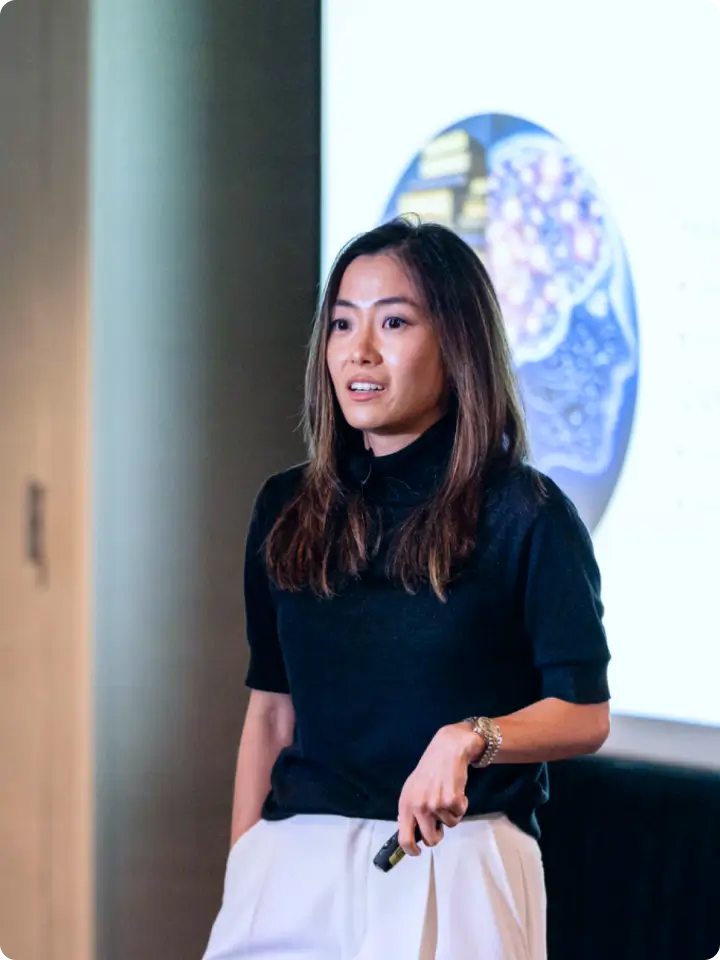
Work through team boundaries, flow, responsibilities, metrics, and AI roles against real organizational constraints.
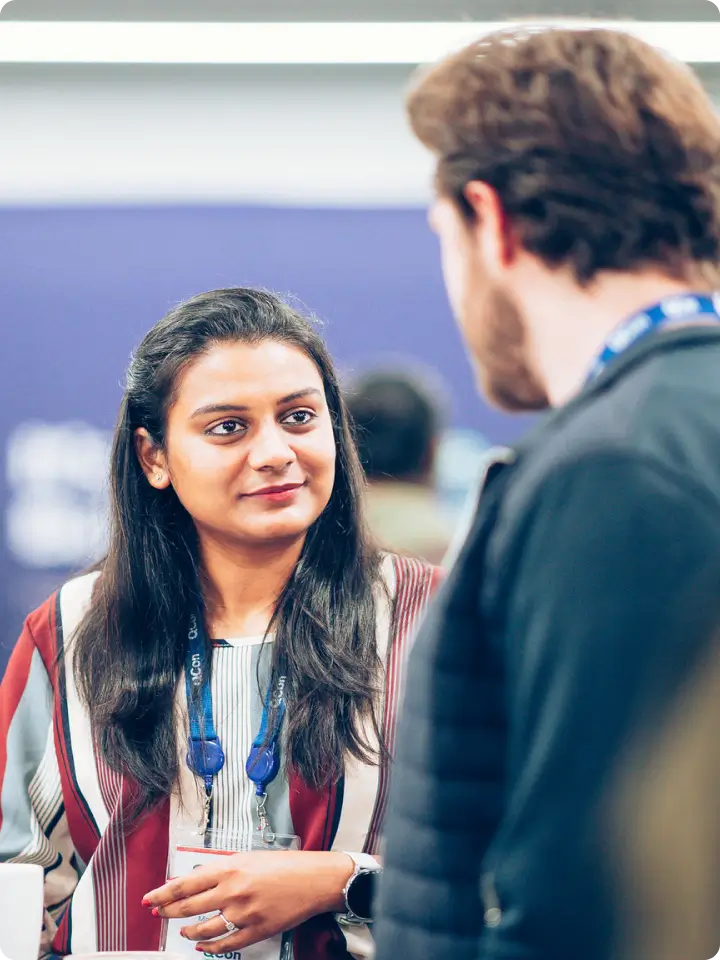
Compare the same decisions with experienced people working in different environments.
Use the capstone to pull the five weeks into a concrete model for how an engineering team could operate.
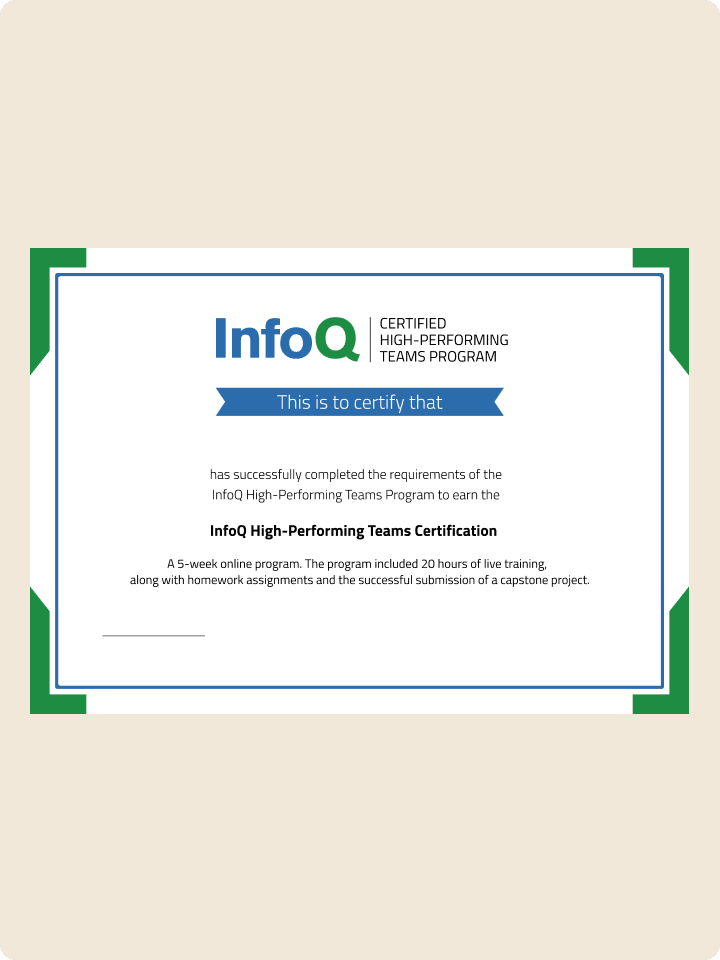
Earn the relevant InfoQ certification by meeting the participation and capstone requirements.
Olimpiu is a technologist with 20 years of experience across software architecture, engineering management, and technology leadership.
He has worked as a Solutions Architect, Engineering Manager, and Chief Technology Officer. His work focuses on how technology can amplify individual and team capabilities, and he regularly examines emerging technology shifts as co-host of the InfoQ Podcast and GOTO Unscripted.
High-Performing Teams Cohort Facilitator
No. Sessions are not recorded. This is a deliberate choice to keep all conversations private and confidential, so that participants feel safe sharing real challenges, ongoing decisions, and truthful perspectives from their organizations.
Participants are expected to attend at least 4 of the 5 weeks. Consistent attendance is one of the criteria for receiving your InfoQ certification.
If you do need to miss a session:
You can contact us for any payment questions at payments@qconferences.com .
We accept PayPal and major credit cards. A payment charged to your credit card or PayPal account is processed directly by us in the funds stated on the website.
The Terms of Participation can be found at https://certification.qconferences.com/terms-conditions .
Registration fees are not refundable.
Yes, we've developed a template you can use to explain to your manager how you can benefit from the cohort participation.
Yes, in-person cohorts are offered at select QCon conferences, such as QCon London and QCon San Francisco.
You can opt to pay by invoice during the registration process by selecting the "Do You Want to Pay Later by Invoice?" checkbox.
Your invoice reflects the ticket price in effect at the time your payment is due. Invoices are generally due 30 days from the date the order is submitted, or 7 days before the event start date—whichever comes first. To ensure all funds are cleared, the "Pay by Invoice" option will be disabled 14 days prior to each event (subject to change without notice). All invoices must be paid in full no later than 7 days before the event begins.
Please note that only participants who have paid in full will be admitted or receive access credentials. Credit card or PayPal payment is required if you are registering after the invoice deadline or prefer immediate confirmation. Once processed, a receipt marked "Paid" will be emailed to you for your records.
Our Privacy Policy details how we collect, use, and protect your data. You can find it at https://www.infoq.com/privacy-policy .
Yes. The program is open to freelancers and the self-employed. When registering, simply enter your trading name or "Independent" in the Company Details section.
The program is a collaborative initiative between InfoQ and QCon, both of which are practitioner-driven brands owned by C4Media Inc.
InfoQ is a practitioner-driven community news site focused on facilitating the spread of knowledge and innovation in professional software development.
We do not offer scholarships or complimentary seats for the InfoQ Certification at this time. Should this change for future cohorts, we will announce it via our official channels.
We are dedicated to providing a safe and inclusive experience for everyone. Our Code of Conduct can be found at https://certification.qconferences.com/code-conduct .
Participants who registered for the online cohorts will receive an email with detailed instructions on how to join the sessions during the week prior to the start of the cohort.
To ensure an optimal experience, you will need:
The program runs for five weeks, with two 2-hour live sessions each week — four live hours a week — plus independent work between sessions and a group Capstone project.
Yes, alumni enrolling in a second Certification program receive a $147 discount. To claim your alumni code, please email certification@qconferences.com when ready to register for your second program.
Plan for four live hours each week, split across two 2-hour sessions, plus a time-boxed exercise between sessions.
No. It is for experienced technical people who influence how engineering work gets done. That includes engineering managers, but also Staff and Principal Engineers, architects, technical leads, and senior engineers.
The talks and frameworks are starting points. Most of the live work is spent applying them to current team decisions, comparing trade-offs, and seeing how the same problem changes under different constraints.
Because team design is context-dependent. A framework can look sensible until it meets your architecture, incentives, team boundaries, delivery model, and organizational constraints.
The cohort gives you reference points from people working elsewhere, plus five weeks to apply the thinking and bring the result back into the discussion.
Across the five weeks, your working group develops a target operating model for an engineering team, including how roles, responsibilities, flow, metrics, and AI-enabled work should evolve. In Week 5, the group presents its work to the cohort. Selected capstones may be developed for publication on InfoQ where the current program rules allow.
The syllabus covers team design and high-performing traits; flow, ownership, and self-sustaining delivery; delivering with AI teammates; metrics when output is no longer the bottleneck; and responsible AI and the team operating model.
Each week you apply the material to a current team, delivery, or operating-model challenge and bring the result back to the cohort.
Certification is awarded based on two factors: consistent attendance and active participation in the live sessions, and the successful completion of the group Capstone project.
Certification is awarded based on active participation in the cohort and completion of the capstone assessment in Week 5.
Experienced engineering managers, senior engineers, Staff and Principal Engineers, architects, technical leads, and engineering leaders who influence how teams are structured and how software is delivered.
The sociotechnical side of architecture. Trade-offs and communication, decentralized decision-making, platform engineering, AI architecture decisions.
Building production software with AI coding agents. Codebase comprehension, agent permissions and sandboxing, sensors and self-correction, independent review, CI for unattended agents.
Securing and governing AI systems in production. Sensitive data handling, threat modeling and red teaming, controls and sandboxes, observability and evals, governance and auditing
Date: October 14, 2026
Time: Mon & Wed, 03:00PM - 05:00PM CEST
Building AI systems that hold up in production. AI-native engineering, RAG and context pipelines, AI agents, platform and infrastructure, evals and reliability.
Date: Dates to be announced
InfoQ’s High-Performing Teams cohort is a five-week live online certification program for experienced software practitioners responsible for how engineering work gets done. It covers team design, delivery flow, AI roles, engineering metrics, and a capstone target operating model, facilitated by Olimpiu Pop.
Date: November 17, 2026
Time: Tue & Thu, 04:00PM - 06:00PM CET
We're adding more cohorts over the coming weeks. To be the first to know when they are live, sign up for our email notifications.
Get email updatesJoin the waitlist to get early access and updates on the InfoQ Online Certification Programs and our conferences. Be the first to know when a cohort opens.
We'll only email you with relevant updates about this program and our conferences.